Why Freedom Feels Out of Reach

Are We Living In a Prison?
Many of us think freedom is something you have to earn by working hard, staying positive, healing, or raising your vibration. What if freedom is always just out of reach, like goal posts that keep changing? Maybe the reason you keep falling back into anxiety, distraction, craving, and comparison is that you’re living in a system that was never meant to help you wake up.
The Gnostics believed the real prison had no walls, but is a reality so convincing that you end up defending it and strengthening it yourself. They called the creator of this world the demiurge, not the true God, but a lower intelligence who rules by dividing and making us forget. The simple truth is that it was never about fixing the outside world. It was always about remembering what we truly are, rooted in the monad, the real source.
There is a part of you that was never born into this world. A spark that doesn’t belong to the cycle, the drama, or fear. The Gnostics taught that this spark comes from the monad, the one pure and I am undivided consciousness that existed before anything else.
The secret they tried to hide for centuries is that the demiurge can’t destroy your divine spark. Instead, it covers it up with your life story, your name, your identity, your personality, your desires, your wounds, and everything else you think makes you who you are. You were never trapped by real chains. You were trapped by a false self, an illusion.
In this post, you’ll learn what the demiurge’s world really is. You’ll see the patterns that keep you trapped and why you rarely notice the prison. Most importantly, you’ll find that the way out isn’t about repeating words you don’t understand. It’s much simpler: it’s about returning, remembering.
Forgotten Origins: The Monad & the Pleroma
To understand what the Gnostics meant by returning to the monad, you need to look beyond the usual forms of spirituality. Before Christianity became an institution, it was an uncharted territory with many schools, teachers, and languages, with each one claiming to know Christ’s message. But in the background, a small group, the Gnostics, believed something very different from what they were taught.
The Gnostics taught that the ruler of this world was not the highest god. They believed there was a source beyond religion, empire, and the visible universe. They called this source the monad; the one. It wasn’t a human-like god, but pure, indivisible consciousness that is everywhere and beyond words. From the monad came realms of fullness and light, called the pleroma, where everything was whole, and knowledge was direct. To them, your true origin isn’t here. Your real home is beyond matter, time, and survival.
This is where the Gnostic story takes a darker turn. Their texts describe a disturbance in which something falls out of alignment. From this, a lower intelligence appears, cut off from the monad’s fullness and unable to see clearly. It mistakes its small world for all of reality. This is the demiurge, the architect of the lower realm.
Some texts show the demiurge saying, “I am God, and there is no other.” In his mistaken belief, he creates a world full of division, pain, struggle and death, where people forget their true source and become lost. But if the demiurge isn’t the true God, then this outside authority starts to lose its power. No one else can control your soul if we do not follow and blindly obey the system.
The path to Infinite Source is inside us.
Gnostic texts were promoted as hearsay. The Nag Hammadi texts were found in Egypt in 1945, including the Apocryphon of John, the Gospel of Truth, and the Hypostasis of the Archons. These writings offered a new kind of salvation, not forgiveness for wrongdoing, but waking up and remembering who you are.
The Gnostics believed that every human soul holds a piece of the monad, a divine spark that has simply forgotten itself.
The Demiurge: The Architect of Division, a manufactured world
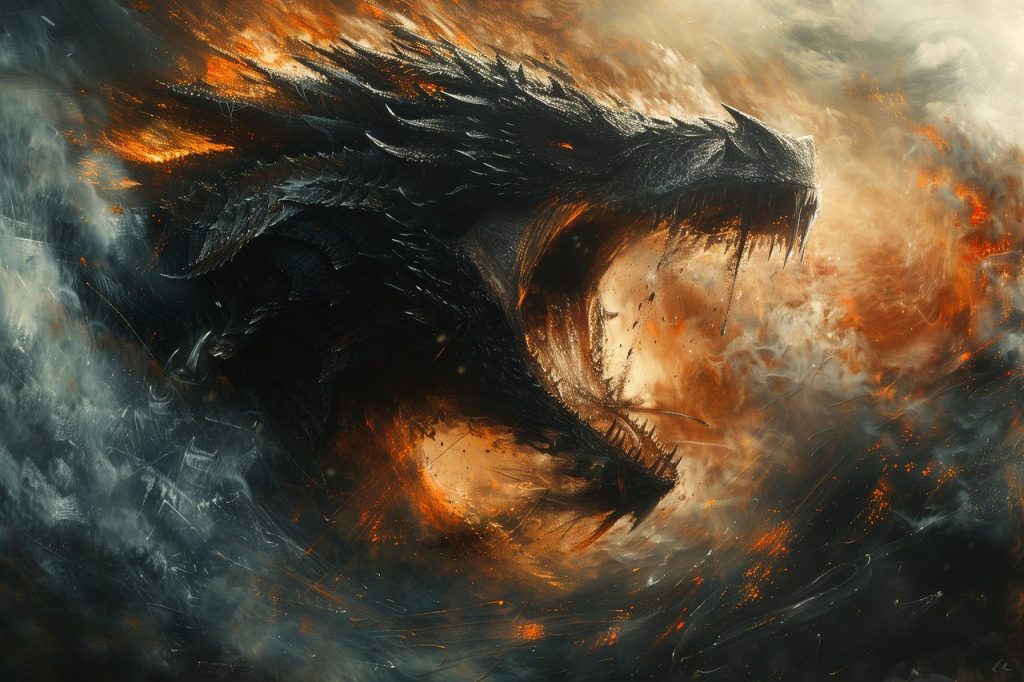
The demiurge’s greatest power isn’t violence or force, but the ability to make you forget what you already know.
If this world is built on forgetting, then how do we remember?
Once you understand that, everything changes. You can’t escape the demiurge’s world just by changing your circumstances.
The demiurge isn’t just a figure from myths or scriptures but a pattern of consciousness, a way reality feels because it’s cut off from the monad. This might explain why some people fix their lives but still feel an emptiness, as if something important is missing.
You can have it all, money, loving relationships, praise, and success, but still have a strong feeling of emptiness that seems to never be filled. Even if you meditate, journal, or follow spiritual teachers, you might find yourself stuck in the same cycles, always craving something that feels beyond reach.
The real cage isn’t your situation but how you identify with it.
The Gnostics said the demiurge rules by division. He divides the world into good and bad, black and white, winners and losers, sacred and ordinary, and more. This makes you feel you have to pick a side to survive, which makes life feel stressful and heavy. It’s not just that life is hard; it’s that the way the world is set up keeps you tense and always striving, constantly trying to fix things, afraid of losing what you have, and rarely being present in the moment.
Our minds are constantly searching into our past with regret or into the future with anxiety, keeping us in endless narratives. When you get lost in these stories, you’re no longer present or whole; you’re split apart.
What most people miss is that the demiurge doesn’t need you to be bad or feel lost. He just needs you to be unaware and unconscious. You react to life rather than recognizing that your real power is within you.
Think about your attention. It’s not just a mental thing, but spiritual currency, the substance of your consciousness. Wherever your attention focuses, your energy will follow. Whatever you pay attention to may then start to control you.
The Mind Prison: Fragmentation & Identity
Life is full of endless distractions on purpose. Noise, drama, information, endless scrolling, outrage, temptation, and fear. This is what keeps us fragmented. When your attention is pulled away from yourself, you forget the power within you. That’s exactly where the demiurge has power.
So the return to the monad begins with a question, not how do I fix my life, but who is the one who thinks they need fixing?
What you call your life is just a surface pattern, a story in time. The demiurge wants you to focus on your story because it creates identity, how you identify yourself. Identity leads to attachment, and attachment keeps you stuck in the illusion. It feels real and solid, but it is sustained by emotional charge, collective agreement, reaction, and constant mental narrative.
That’s why it weakens in inner stillness and why silence can feel uncomfortable. Because it isn’t you who feels uneasy in stillness. It’s the ego. In stillness, the ego loosens, and once it loosens, something else becomes visible. That’s your divine spark, the part of you that can observe your thoughts instead of getting caught up in them. It’s the part that stays the same even when everything else changes. Most people don’t realize that if the demiurge’s world is kept alive by your attachment to thoughts and emotions, the way out isn’t to go somewhere else. It’s to become something else.
You pull your awareness out of the machinery, not by fighting it, but by not feeding it.
If you do not supply the demiruge with low-vibrational emotions, he has nothing to feed off of and is therefore unable to control anyone who has become whole again.
The monad isn’t a place in the sky. It’s a state of consciousness before words and emotions are fragmented.
The return begins when you stop living a fragmented life and let your thoughts guide you. When you remember the awareness behind all the mental noise, you realize the monad isn’t somewhere else; it’s inside you. That’s when things begin to shift. The world isn’t any easier, but it can’t define you the same way anymore.
The demiurge isn’t outside you; it rules through forces that shape your consciousness from within. The ancient texts call these forces the archons.
Attention as Spiritual Currency

Many people misunderstand the word Archons and picture monsters in some invisible space. But in the Gnostic view, archons aren’t just creatures; they’re functions, containment mechanisms, and laws of the lower realm that move through your thoughts, emotions, and identity. They don’t need to threaten you directly. They just keep you stuck in mental states that block gnosis. (Gnosis means knowledge). That’s why you can have moments of awakening but still get pulled back down, because the system reacts automatically.
As soon as you start to remember, something tries to pull you back into the old patterns. When you find stillness, your mind will suddenly change direction. When you step back from your identity, the world will initially seem louder. Problems begin to show up, distractions increase, and drama grows. The noise always returns.
The system pushes back because it senses you’re becoming less predictable, more difficult to program, and harder to control. The prison isn’t made of walls; it is run by momentum. Most people never leave because they never stop moving, consuming, thinking, or telling themselves stories. The archonic mechanism works like gravity, pulling you back to the heaviest states of mind until you forget higher awareness. It uses things like fear, craving, comparison, shame, anger, and obsession with time or self-image. It’s not because you’re weak, but because these states create attachment, and attachment is the real chain.
Here’s the paradox: the demiurge can’t reach the monad, can’t see it, and can’t enter it. So he created a fake version, a substitute that appears to be spiritual progress but keeps you trapped.
Many people get stuck here. They start to see through the illusion, but instead of turning inward, they build a spiritual identity. They collect beliefs and labels, chase practices and understandings, and feel guilty if they don’t always feel positive.
The Archonic Mechanism & The False Ascent
This is called the false ascent. It may feel like freedom because it seems higher, but it still feeds the same system, always becoming, striving, and proving. As long as you’re trying to become something, you’re stuck in time and outside the present.
The present moment is where you will remember the monad. So the real escape isn’t climbing higher in the system, but stopping your participation in how the system defines you. That’s why gnosis isn’t about belief; it’s about seeing.
It’s realizing you are not your mind, your body, your thoughts, your story, your emotions, your past, or your future. You are the awareness that observes it all. The divine spark of the monad is caught up in the machinery for a while. When you truly recognize this, the archons lose their hold, not because you fought them, but because you stopped fighting at all.
Returning to the monad isn’t dramatic or showy. It’s not even something others can see. It’s about turning your attention inward. It’s when you stop being pulled outward and start resting in the awareness that is behind everything. When you do this, something changes. The world doesn’t go away; it just stops controlling your nervous system. You still live here, but you’re not caught up in it. You move through the demiurge’s world like someone lucid-dreaming, fully awake. That’s the beginning of real freedom.
But how do you reach this state and keep it? How do you live this way every day without slipping back into old habits?
The answer is about perceiving; it’s about actually stepping out of the trance. It’s one thing to know the map of the demiurge’s world, but it’s another to leave it behind. The truth is, you don’t escape by thinking about escape.
You escape by changing what you pay attention to and the actions you take. Whatever your attention is tied to becomes your reality. Whatever keeps grabbing your awareness becomes what you serve.
The demiurge’s world is set up to steal your attention in countless ways, through urgency, worry, craving, comparison, self-judgment, fantasy, and regret. So the first practice isn’t mystical. It’s simple: start noticing what pulls your attention.
The need to be understood, the need for validation, the fear of falling behind, or the fear of replaying your past. Think about what happens when you look at an old photo. You’re right back there. Your mind treats it as proof that the past happens, even though you’re seeing it now.
This is how the mind distorts the present.
Then ask yourself: who is being pulled right now? Don’t just think about it, try to really notice.
Every time you notice the pull without giving in, you weaken the system. You take back your energy and bring it back to wholeness.
This is where returning to the monad really starts.
It’s not about new beliefs, but about a new way of relating to your thoughts. Let your thoughts come and go. Watch them, but don’t become them. Notice how often your mind tries to turn everything into an identity, even your spiritual growth or healing. It wants to make a story or a label out of everything. When you observe this, pause and feel the stillness underneath. That space is closer to the monad than any idea could be.
Now comes the second step, which most people skip because it seems too simple: stillness. Not just relaxation, but stillness. Once a day, sit in silence for ten minutes. No mantra, no music, no guidance, only silence.
Reverse Attention: The Return
Instead of fighting your thoughts, let them pass by like clouds and rest as the one who notices them. If a thought comes up, don’t argue with it, narrate it, or resist it. Just see it as a ripple, not the source. Then return to the awareness that never changes.
In the beginning, it might feel like nothing is happening, and that’s the point. The ego says nothing is happening because the system isn’t being reinforced. But if you stay with it, something deeper appears beneath; a presence, a wholeness that doesn’t need to become anything.
That’s your divine spark remembering itself. It’s not about one big awakening, but many small ones that add up over time. Every time you notice you’ve been caught up in thought, don’t punish or analyze yourself. Just return to inner quiet, to awareness, to the monad, as a practice.
This isn’t a story about old texts or myths. It’s a mirror showing you why life feels heavy, why your mind is restless, and why the world keeps pulling you away from yourself. The demiurge’s world isn’t just made of matter. It’s built on fragmentation, division, and the constant pressure to become, fix, prove, chase, and defend. As long as you identify with that pressure, you stay trapped in the system.
But here’s the Gnostic secret: the system can’t hold you forever. It only holds what you keep feeding with your attention. It can only trap what you let define you. That’s why returning to the monad is the only way out.
Stillness
It’s not about a new belief, but about dissolving the need for belief at all. The monad isn’t a place you go to; it’s the reality beneath your mind, the wholeness beneath your identity, the source that was never divided or wounded. The more you return to that stillness, the less power the demiurge’s world has over you. You still live here, but it doesn’t own you. You still face problems, but they don’t define you. You still feel emotions, but they don’t become your whole identity. This is what real freedom looks like, not disappearing or being perfect, but being present. It’s an awareness so rooted in the monad that the world can’t hypnotize it anymore.
So here’s the last question.
If the demiurge’s world is sustained by our unconscious participation, what happens when you stop playing along? What becomes possible when you stop following fear, craving, and identity? And what if you saw every distraction not as a failure, but as a beginning to remembering? Remembering who we really are. Not the identities we may have believed we are.
Have you felt that pull? The more you remember now, the less power the illusion will have over you later. In the end, the way out was never outside you. It was always within. It was always the monad.
Resources
Gnostic Eye, The Monad: The Hidden Exit From the Demiurge’s Reality, ( Video) Youtube,.https://www.youtube.com/watch?v=1L7G6h7P8v8, Published January16, 2026.